

Beyond the Chandelier: How Thoughtful Lighting Transforms a Luxury Home
There are certain things you notice immediately when you walk into a beautiful home.
The stone. The architecture. The furnishings. The art.
Lighting is different.
When it is done well, you may not notice the lighting itself. Instead, you notice the way the stone comes to life, the warmth of the wood, the dimension of a ceiling, or how inviting a room feels as the sun begins to set.
That is what makes lighting such an important part of luxury interior design.
It is not simply about choosing beautiful fixtures. It is about understanding how a home should look, function, and feel throughout the day.
At Semmelmann Interiors, lighting is considered alongside the architecture from the beginning.
Because the best lighting does not simply illuminate a home.
It brings the design to life.
The Best Lighting Plans Begin Before the Fixtures Are Chosen
One of the most important things to understand about lighting a custom home is that the process begins much earlier than most people expect.
Long before we select a chandelier or fall in love with a pair of sconces, we are thinking about the electrical plan.
Where will the furniture sit? Where will artwork hang? Does the kitchen island need pendants? Will the cabinetry have integrated lighting? Is there a ceiling detail that should be illuminated?
These decisions may not be the most glamorous part of interior design, but they have an enormous impact on the finished home.
Once construction progresses, changing them becomes much more difficult.
That is why we prefer to think about lighting as part of the architecture rather than something layered onto it at the end.
When the interior designer, architect, builder, and electrical team consider these details together, there are far more opportunities to create something special.
A Beautiful Home Needs Layers of Light
Walk into a beautifully lit room in the evening and chances are there is much more happening than one fixture overhead.
There may be recessed lighting quietly illuminating the room, lamps creating warmth beside a sofa, sconces highlighting a wall, integrated LEDs within cabinetry, and a chandelier providing the finishing statement.
You may not consciously notice every source.
You simply notice that the room feels good.
This layering is especially important in larger luxury homes.
A kitchen needs enough light for cooking and preparation, but it should also feel inviting when guests are gathered around the island.
A great room needs to function during everyday family life while still feeling intimate enough for a quiet evening.
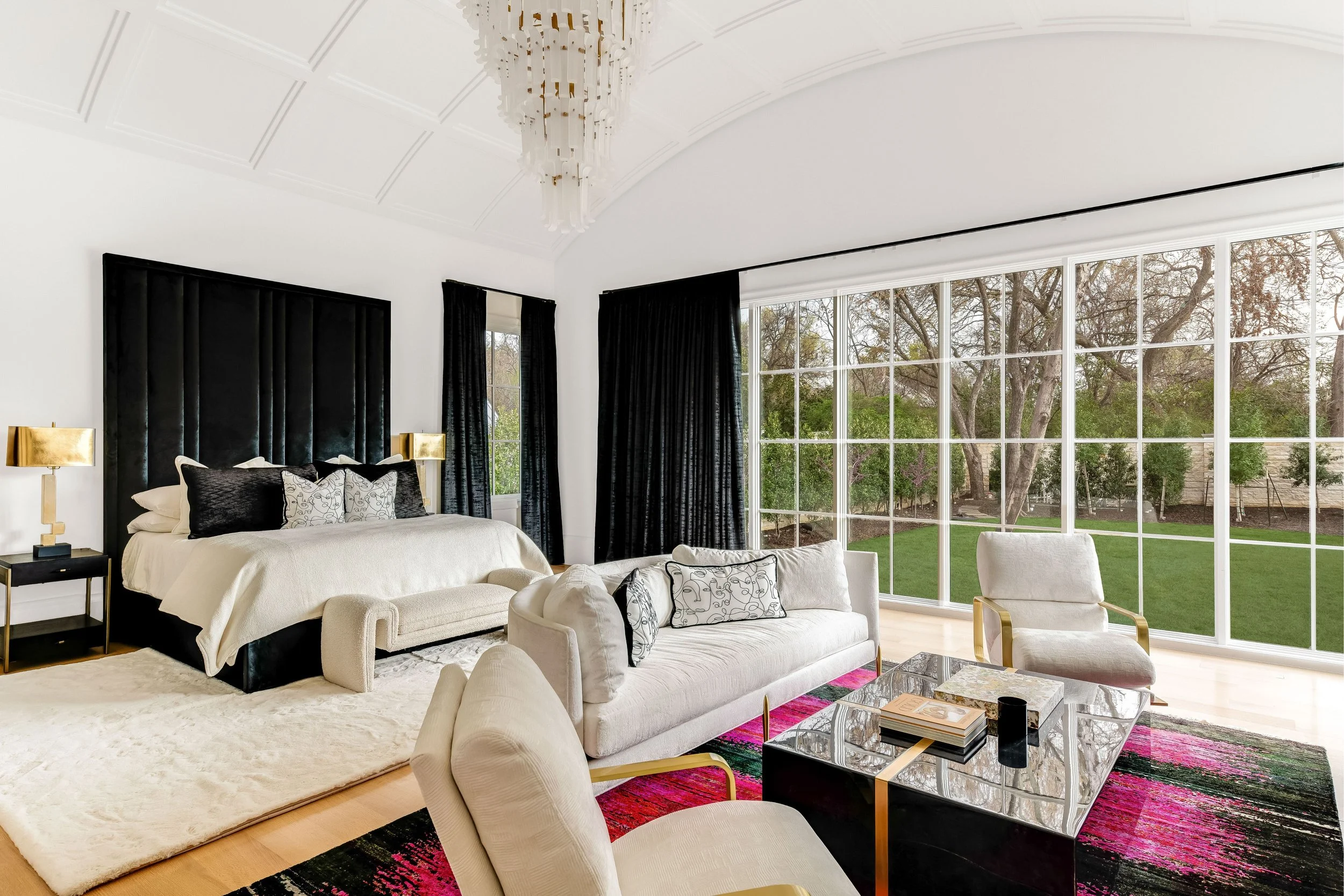
A primary suite needs practical lighting without losing the softness that makes it feel like a retreat.
Every room has a different purpose, and the lighting should respond to it.
Rather than asking, “How much light does this room need?” we prefer to ask, “How will this room be lived in?”
Lighting Can Be the Jewelry of a Room
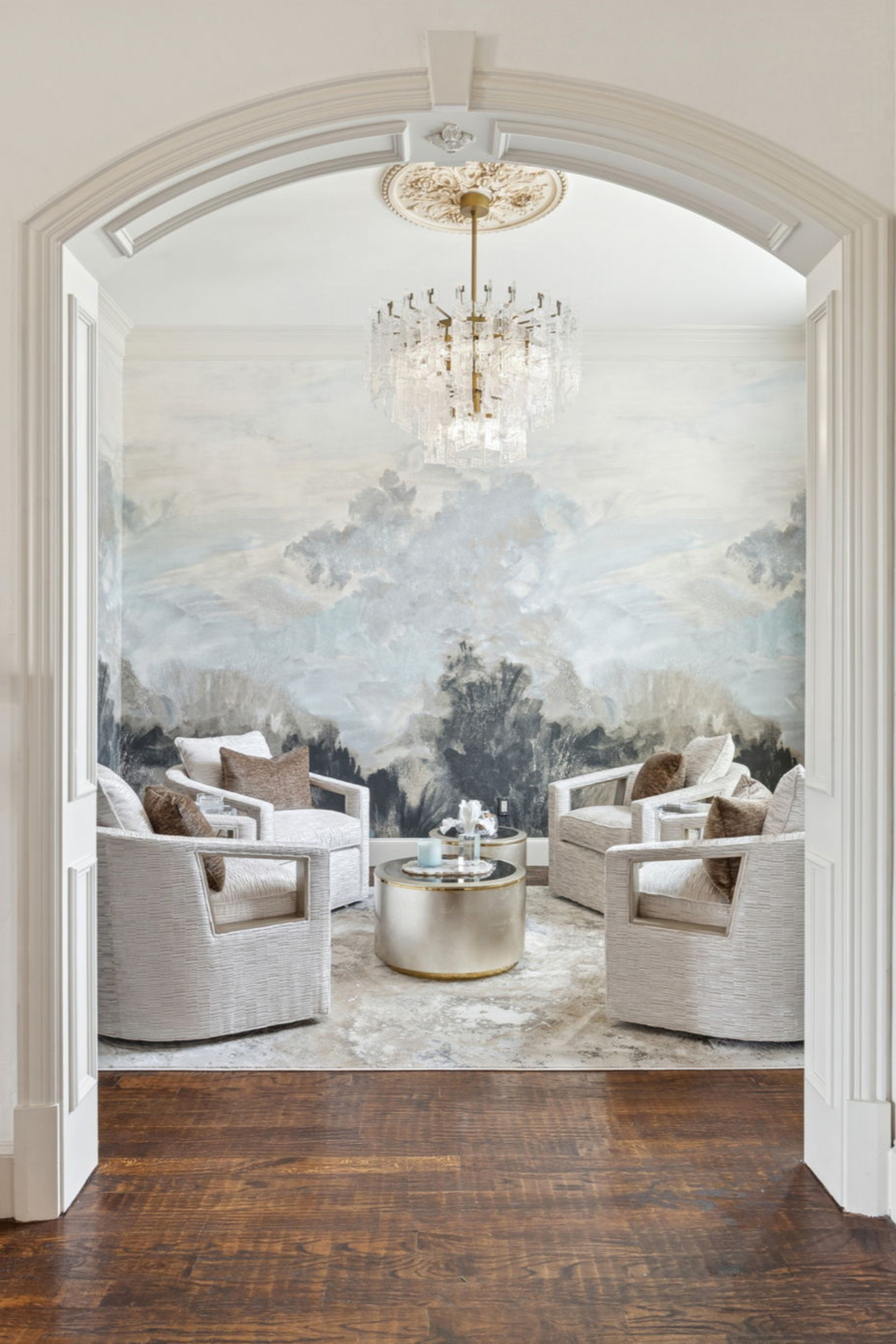
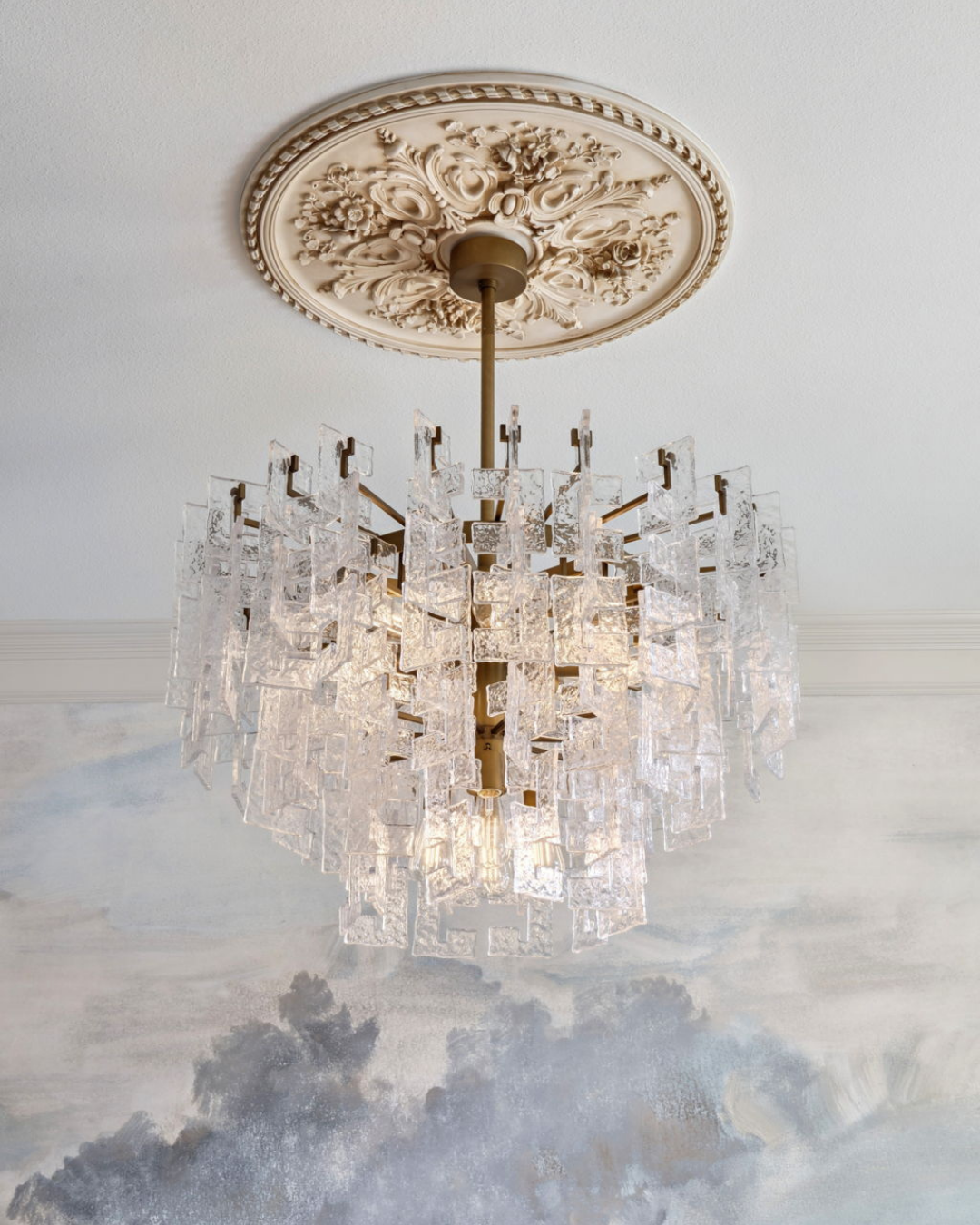
We often think of decorative lighting as the jewelry of a home.
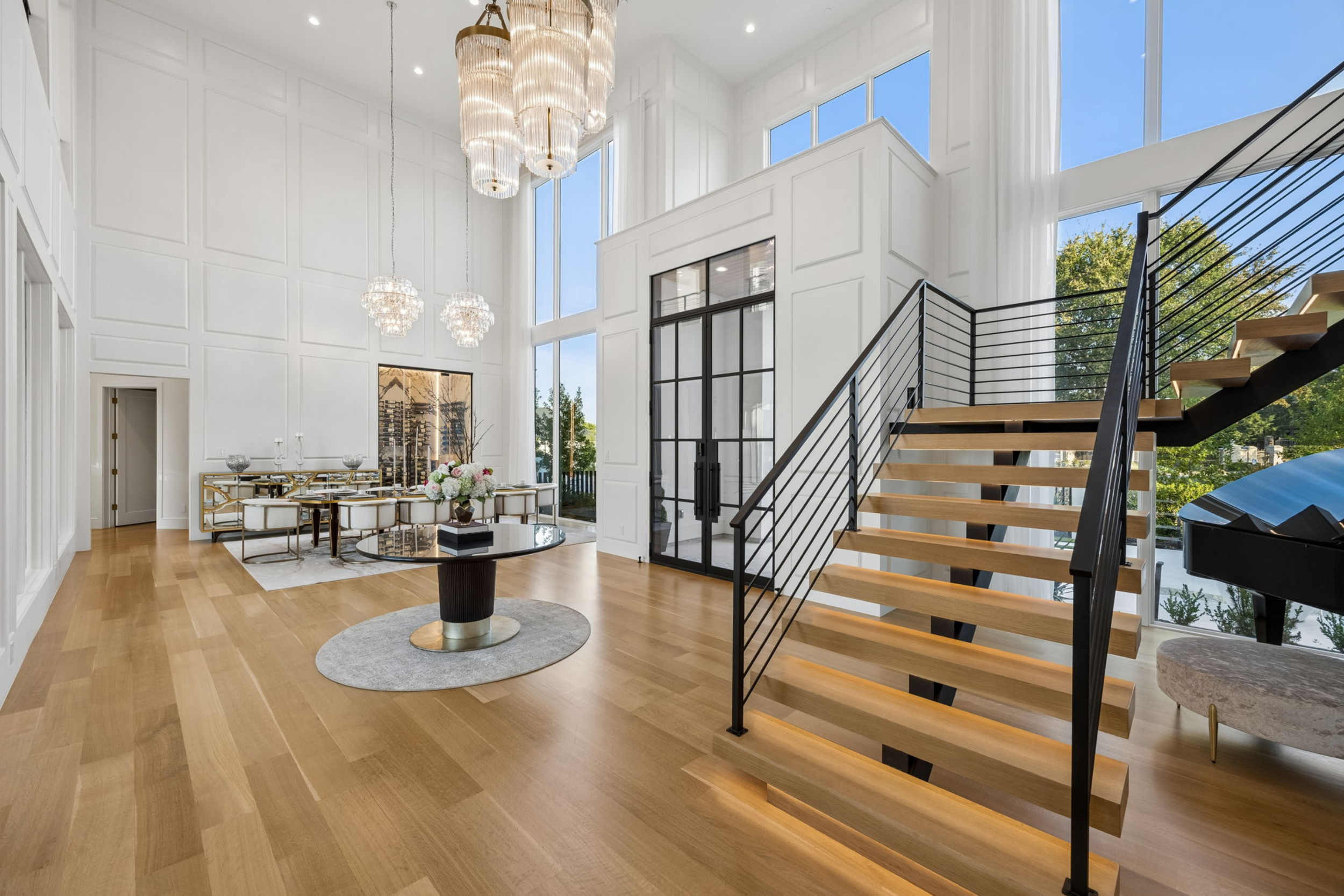
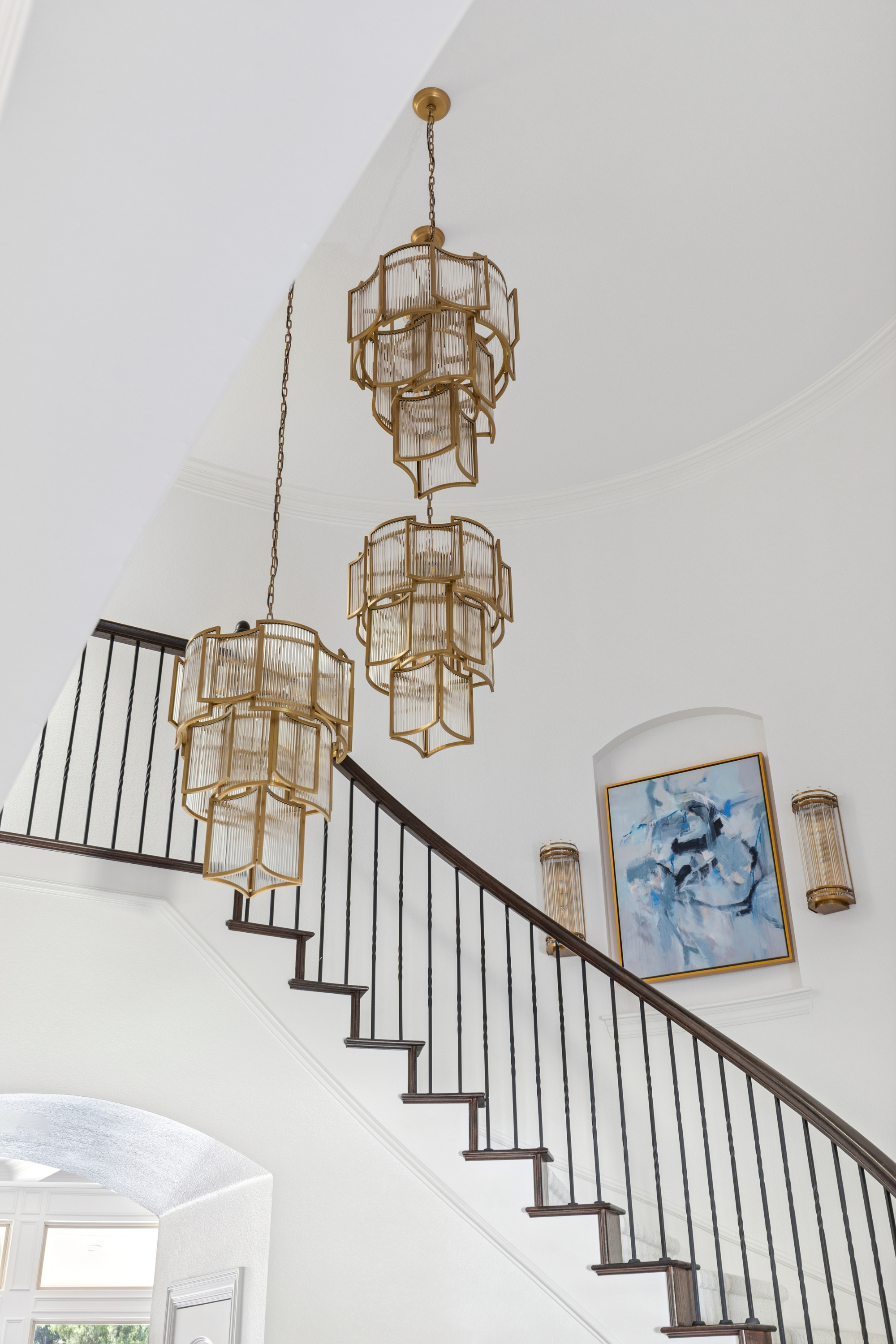
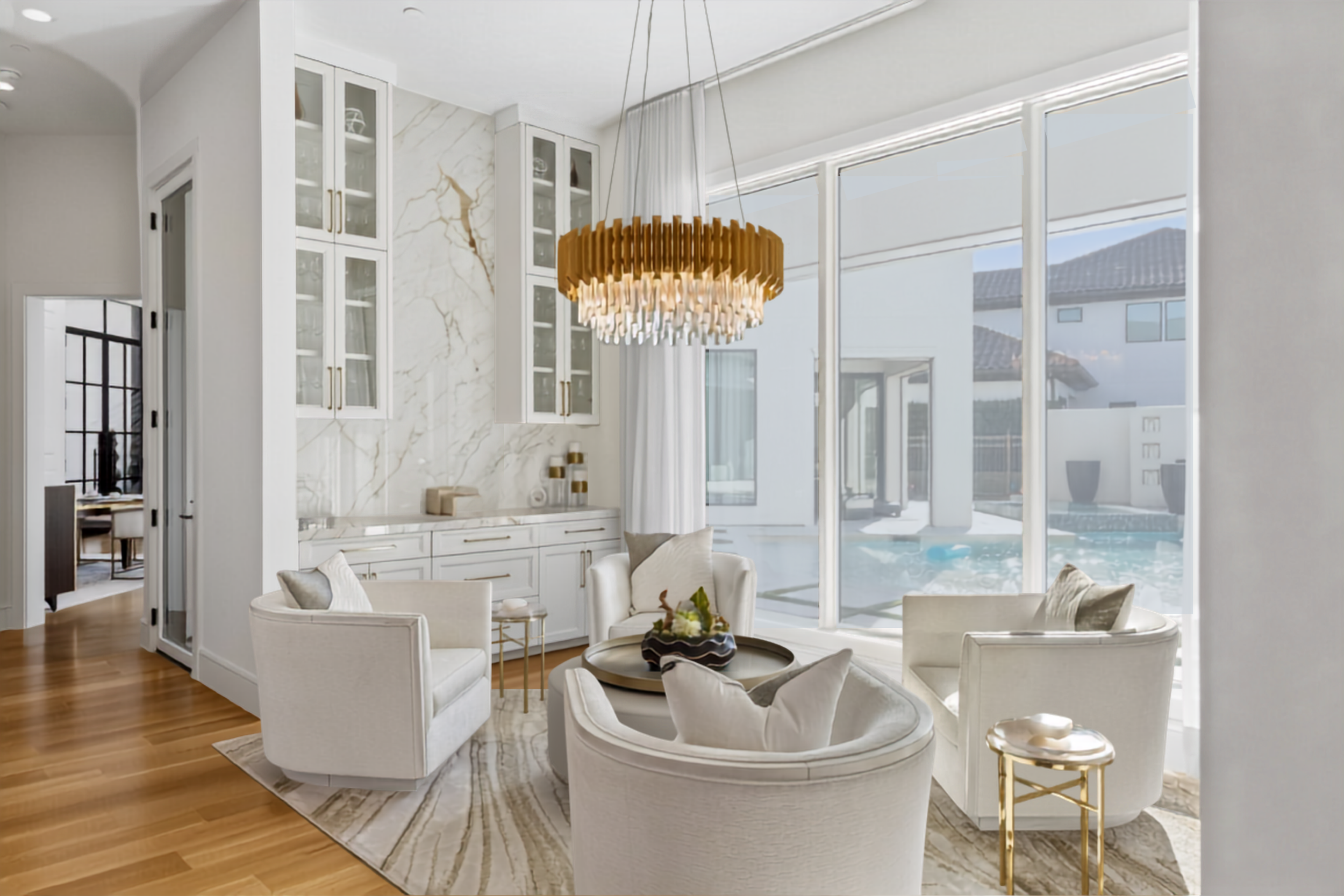
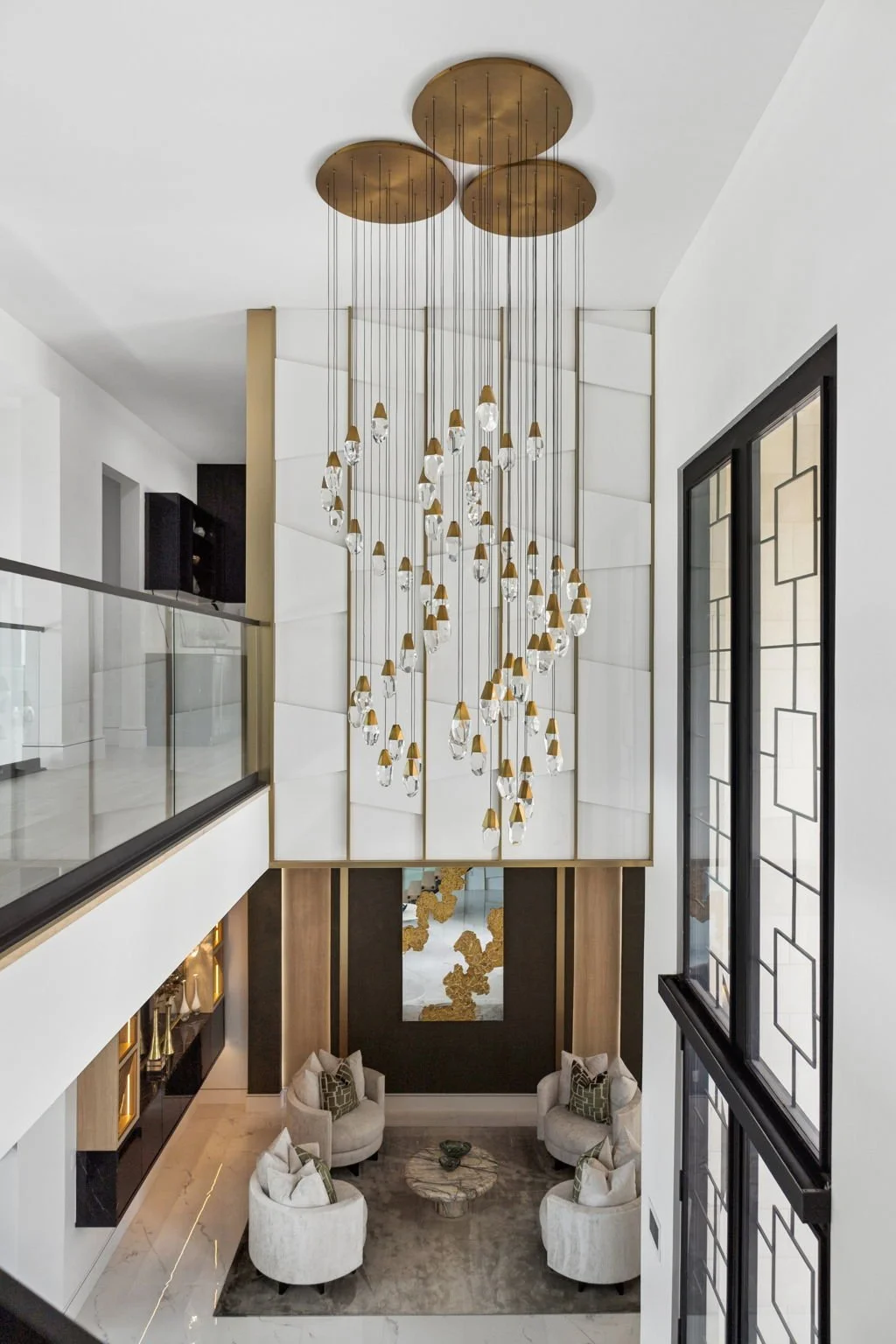
A sculptural chandelier can transform a dining room. Pendants can give a kitchen its identity. Beautiful sconces can bring intimacy to a hallway, powder bath, or primary suite.
But just because a fixture is beautiful does not mean it is right for the room.
Scale matters.
A chandelier that looks enormous in a showroom can suddenly feel surprisingly small beneath a soaring ceiling. Pendants that seem substantial online can disappear over an oversized kitchen island.
Placement matters too.
A dining chandelier should relate to the table beneath it, not simply the center of the room. Bedside sconces should relate to the bed and headboard. Kitchen pendants should work with the island, cabinetry, and surrounding sightlines.
This is why we rarely look at a lighting selection by itself.
We consider the architecture, furniture, ceiling height, materials, and other fixtures that will be visible from the space.
The goal is not to fill a luxury home with statement lighting.
It is knowing where the statement belongs.
Some of the Best Lighting Is Almost Invisible
Not every lighting moment needs a decorative fixture.
In fact, some of our favorite applications are the ones you barely notice.
Integrated lighting within custom cabinetry can give shelving depth and dimension. Lighting along a staircase can emphasize its form. A soft glow within an architectural detail can completely change how that feature is experienced.
Then there is stone.
Natural stone already brings movement and character into a home, but thoughtful lighting can reveal qualities that might otherwise go unnoticed.
In certain applications, backlighting can expose layers, veining, color, and translucency that completely transform the material after dark.
These moments do not necessarily announce themselves.
They simply make the home feel more considered.
And often, that is where luxury is felt most.
A Home Should Feel Beautiful After the Sun Goes Down
Natural light can do incredible things for an interior.
Floor to ceiling windows can flood a great room with daylight. Morning sun can warm a kitchen. Large glass doors can make indoor and outdoor living feel almost seamless.
And then the sun goes down.
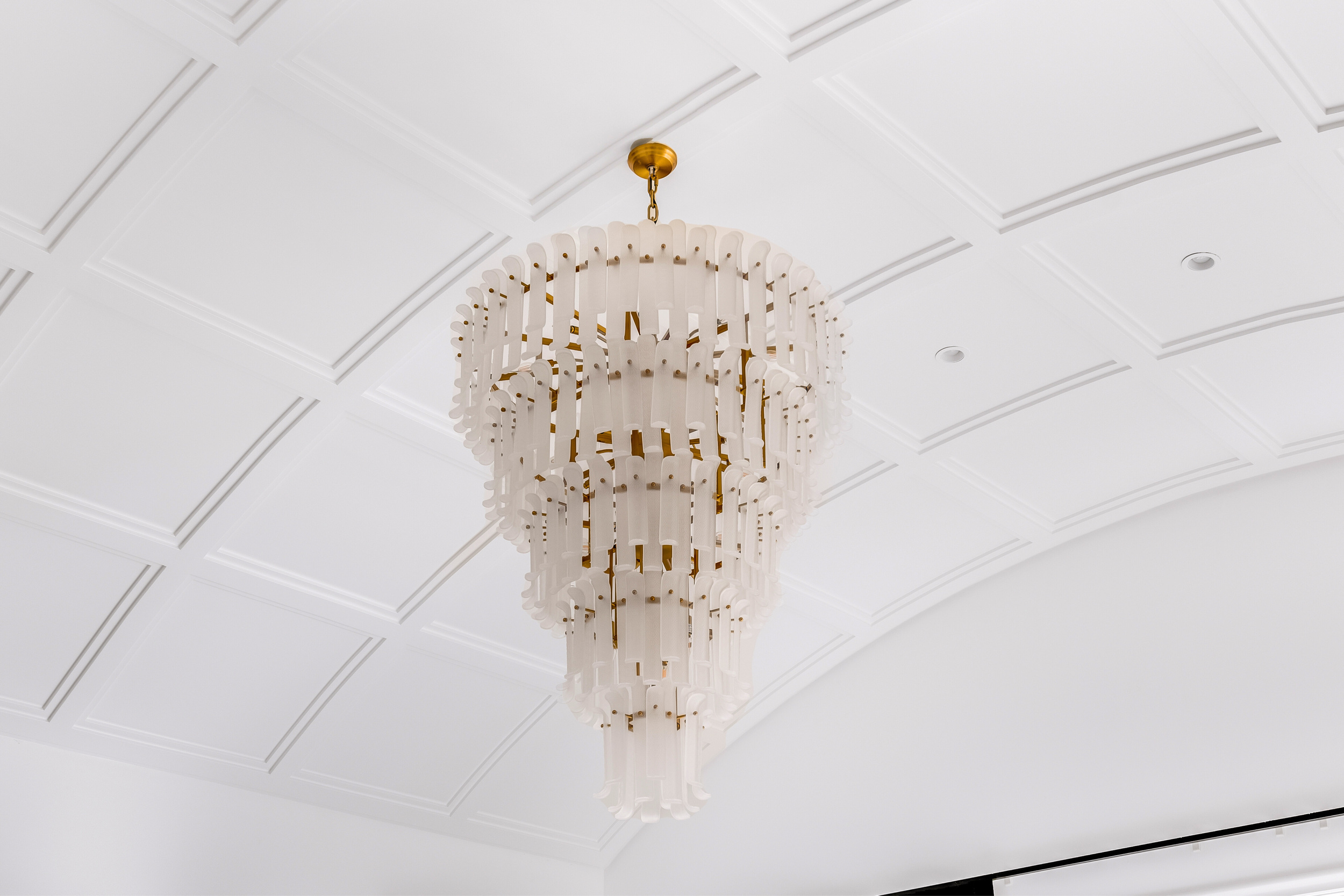
A home that felt bright and dimensional during the day can feel completely different at night if artificial lighting was not thoughtfully considered.
This is where layering and dimming become particularly important.
The kitchen may need bright, functional light while dinner is being prepared. Once guests arrive, that same space should be able to soften.
The great room should transition from an active gathering space to somewhere comfortable enough to settle into at the end of the evening.
The color of the light matters too.
We spend considerable time selecting the exact undertone of wood, the movement within a slab of stone, the finish on cabinetry, and the color of a textile.
Lighting affects how every one of those selections is perceived.
Lighting that is too cool can make an otherwise warm interior feel stark. Stone and paint colors can look completely different under artificial light than they do in daylight.
We want the home to look the way it was designed to look, morning, afternoon, and evening.
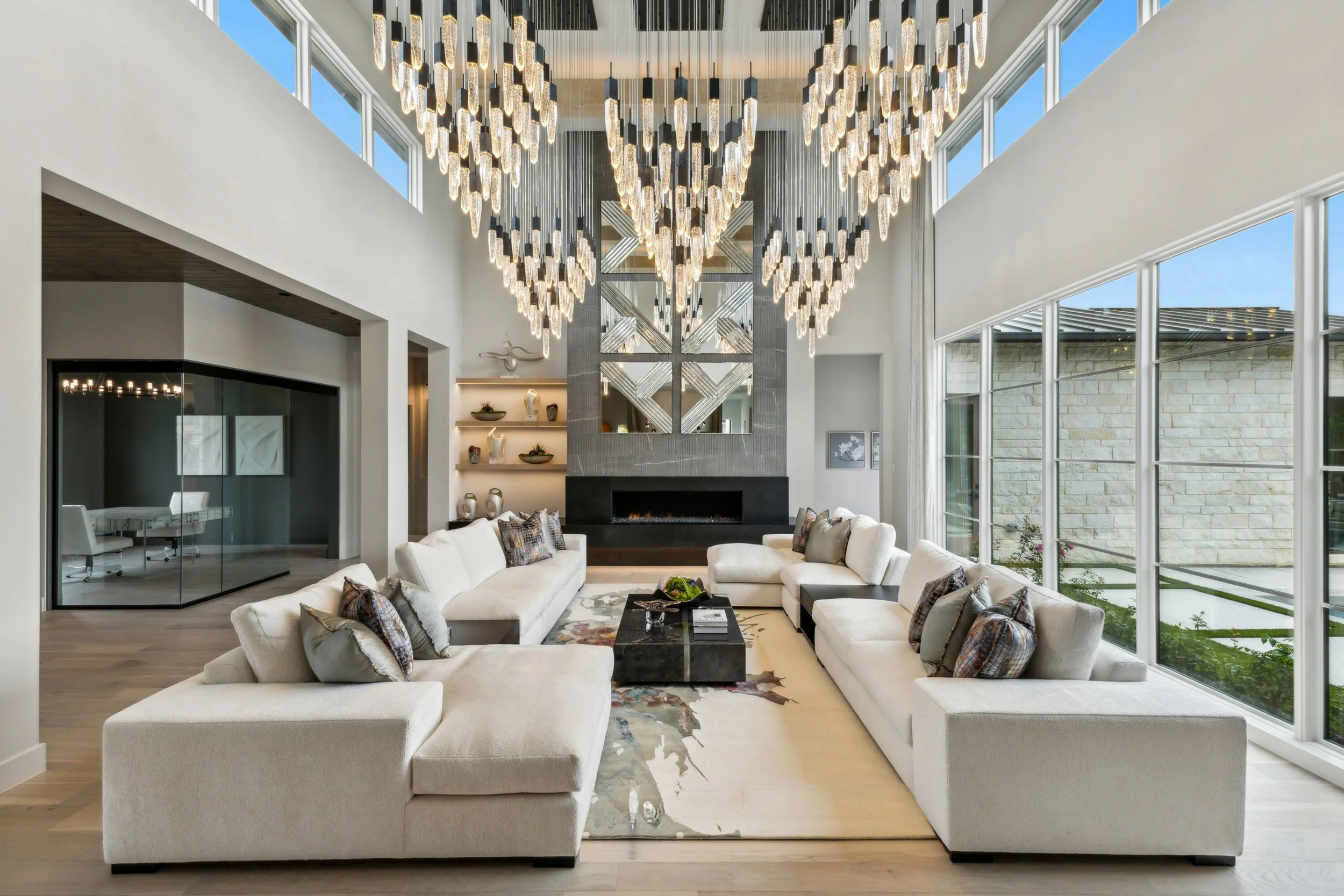
Designing the Feeling, Not Just the Fixture
When we begin designing a home, we are not simply creating a list of things that need to be selected.
We are thinking about an experience.
What should you feel when you walk through the entry?
Where should your eye go when you enter the great room?
Should the dining room feel dramatic or intimate?
What happens when you turn the kitchen lights down after dinner and move into the living room?
These questions influence lighting just as much as dimensions and specifications do.
Lighting also needs to have a relationship with the materials around it.
Cabinet hardware, plumbing fixtures, stone, furnishings, artwork, and decorative lighting should feel connected without feeling overly coordinated.
A brass chandelier does not mean every metal needs to be brass. A contemporary home does not mean every fixture needs to feel minimal.
We are much more interested in creating relationships than creating matches.
Because ultimately, a home is not experienced from a floor plan.
It is experienced in moments.
And lighting has the ability to shape every one of them.
The Semmelmann Interiors Approach
At Semmelmann Interiors, lighting is considered from the earliest stages of our full service interior design process.
For luxury custom homes and new construction projects, our team works alongside architects, builders, electricians, and other trades to coordinate lighting with the architecture and interior design.
From integrated architectural lighting to statement chandeliers, pendants, sconces, and lamps, every selection is considered as part of the larger design.
For our clients throughout Fort Worth, Dallas, Westover Hills, Westlake, Southlake, Highland Park, University Park, Preston Hollow, and surrounding Dallas Fort Worth communities, the goal is not simply to create a home that photographs beautifully in daylight.
We want it to feel just as extraordinary on a quiet evening at home.
Because choosing the right lighting is not really about choosing lights.
It is about deciding how you want your home to feel.